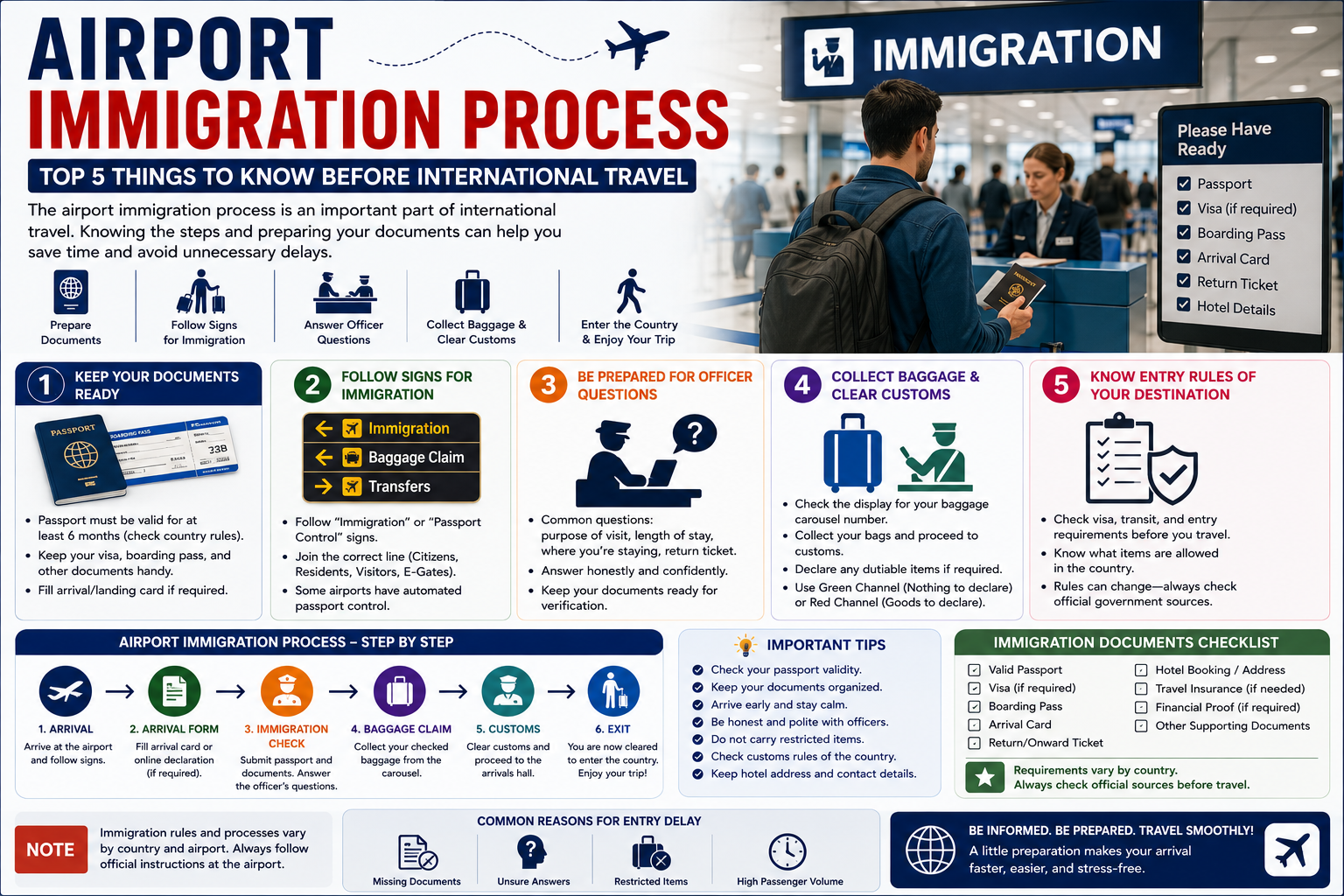
Traveling internationally can be exciting, but the airport immigration process can sometimes feel confusing, especially for first-time travelers. After landing in another country, passengers may need to complete passport control, answer questions from immigration officers, collect their baggage, and pass through customs.
The exact airport immigration procedure depends on the country, airport, nationality, visa status, and purpose of travel. Some travelers may use automated passport gates, while others need to speak directly with an immigration officer.
This guide explains the basic international airport immigration process and the top five things you should know before traveling.
Read More:Airline Check In Online
Top 5 Things to Know About the Airport Immigration Process
1. Keep Your Passport and Travel Documents Ready
The first step in the airport immigration process is making sure your documents are ready before you reach passport control.
Depending on your destination and personal travel circumstances, you may need:
- Passport
- Valid visa, if required
- Boarding pass or flight details
- Arrival or landing card, where required
- Hotel booking or accommodation details
- Return or onward ticket
- Address of your destination
- Supporting documents related to your trip
Different countries have different entry requirements. Before traveling, check the official immigration or border authority for your destination.
Keep Documents in Your Carry-On
Do not put your passport or essential travel documents inside checked baggage.
Keep them in:
- A travel wallet
- A personal bag
- An easily accessible carry-on compartment
When you arrive at immigration, having everything ready can help make the passport control process smoother.
2. Follow Signs for Immigration or Passport Control
After getting off an international flight, follow airport signs for:
- Immigration
- Passport Control
- Arrivals
- Border Control
At large international airports, you may need to walk a significant distance before reaching the immigration area.
Look for signs showing different lines, such as:
- Citizens or residents
- Visitors
- Foreign passports
- Diplomatic passports
- Automated passport control
- E-gates
Always join the correct queue based on your passport and travel status.
Automated Passport Gates
Some airports use electronic gates, often called:
- E-gates
- Automated passport control
- Smart gates
Eligible passengers may scan their passport and complete identity verification without speaking to an immigration officer.
However, not every passport holder or traveler is eligible to use these systems. Follow the instructions displayed at the airport.
3. Be Prepared to Answer Immigration Questions
If you meet an immigration officer, they may ask questions about your visit.
Common questions can include:
- What is the purpose of your visit?
- How long will you stay?
- Where are you staying?
- Do you have a return ticket?
- Are you visiting for tourism, business, study, or another reason?
The best approach is to answer honestly and clearly.
Keep Your Answers Simple
You usually do not need to provide unnecessary information.
For example:
Question: What is the purpose of your visit?
Answer: Tourism. I am visiting for one week.
If the officer requests additional documents, provide the information requested.
The immigration officer may verify whether you meet the country’s entry requirements before allowing you to enter.
4. Collect Your Baggage and Complete Customs Procedures
After completing immigration, you will usually continue to the baggage claim area.
Check the airport information screens for your:
- Flight number
- Baggage carousel number
Wait for your checked luggage and make sure you collect the correct bags.
Check Your Luggage Tags
Before leaving the baggage area, verify that the luggage belongs to you.
After collecting your bags, follow signs for:
- Customs
- Exit
- Arrivals hall
The airport customs process is different from immigration.
Immigration vs Customs
Immigration focuses primarily on the traveler’s identity, passport, visa, and permission to enter the country.
Customs focuses on the goods and items a traveler is bringing into the country.
Depending on the country, you may need to:
- Use a green or red channel
- Complete a customs declaration
- Declare certain goods
- Pay applicable duties or taxes
Always follow the customs rules of your destination country.
5. Know Your Destination’s Entry Requirements Before Flying
The best way to avoid problems during the airport immigration process is to prepare before your trip.
Entry requirements can depend on:
- Your nationality
- Passport type
- Destination country
- Purpose of travel
- Length of stay
- Visa status
- Transit route
Some countries may also require additional information before arrival, depending on their current border procedures.
Important Things to Check
Before your flight, confirm:
- Passport validity requirements
- Visa requirements
- Transit requirements
- Entry authorization requirements
- Customs restrictions
- Rules for bringing goods into the country
Requirements can change, so always use official government or border authority information for your specific destination.
Step-by-Step Airport Immigration Process
Here is a simple airport arrival process for most international travelers.
Step 1: Leave the Aircraft
After landing, follow the signs for Arrivals or Immigration.
Do not follow signs for baggage claim if immigration is required first.
Step 2: Complete an Arrival Form if Required
Some countries require travelers to complete:
- A paper arrival card
- An electronic arrival declaration
- A customs form
Make sure the information matches your travel documents.
Step 3: Join the Correct Immigration Line
Look for the queue designated for your:
- Passport nationality
- Residency status
- Visitor status
- E-gate eligibility
Step 4: Present Your Passport
When it is your turn, present your passport and any other documents requested.
The officer may:
- Review your passport
- Verify your identity
- Ask questions
- Check your visa or entry authorization
- Record your arrival
Step 5: Receive Permission to Enter
If you meet the entry requirements, you will be allowed to continue into the country.
In some cases, the process may involve a physical passport stamp, while other countries use electronic entry records.
Step 6: Collect Your Checked Baggage
Check the flight information screens and go to the correct baggage carousel.
Step 7: Pass Through Customs
Declare goods if required and follow the instructions of customs officials.
Step 8: Enter the Arrivals Hall
After completing the required procedures, you can leave the restricted arrivals area and continue your journey.
Immigration Documents Checklist
Before traveling internationally, review this checklist.
Essential Documents
- Valid passport
- Visa, if required
- Flight details
- Boarding pass
- Accommodation information
- Return or onward travel details, if applicable
- Travel itinerary
- Destination address
Additional Documents
Depending on your trip, you may also need:
- Business invitation
- Student documents
- Travel authorization
- Supporting financial documents
- Other documents required by the destination
Do not assume that every traveler needs the same documents. Always check the requirements that apply to your nationality and destination.
Tips for a Smooth Airport Immigration Experience
1. Fill Out Forms Carefully
Check your passport number, name, address, and other details before submitting an arrival form.
2. Keep Important Documents Accessible
Avoid searching through multiple bags while standing at passport control.
3. Answer Honestly
Provide accurate information to immigration officers.
4. Know Where You Are Staying
Keep your hotel name, address, or host information available if requested.
5. Check Your Passport Validity
Some destinations require your passport to remain valid for a specific period beyond your arrival or departure date.
6. Allow Extra Time for Connections
If you have an international connection that requires immigration procedures, allow enough time for:
- Passport control
- Baggage collection
- Customs
- Security screening
- Travel to the next gate
Common Airport Immigration Mistakes to Avoid
Forgetting Important Documents
Always check your passport and visa requirements before leaving home.
Joining the Wrong Queue
Look carefully at signs for citizens, residents, visitors, and automated gates.
Giving Incorrect Information
Make sure the information you provide matches your travel documents.
Not Checking Entry Rules Before Traveling
Visa and entry requirements may depend on your nationality and travel purpose.
Confusing Immigration With Customs
Remember that immigration checks the traveler and permission to enter, while customs focuses on goods being brought into the country.
Airport Immigration for Connecting Flights
The immigration process after landing can be different when you are connecting to another flight.
Your connection may involve:
Airside Transit
You remain in the secure airport area and continue directly to your next flight.
Entering the Country During Your Connection
You may need to pass through immigration before:
- Collecting baggage
- Changing airports
- Staying overnight
- Re-checking for another flight
Always check your transit and visa requirements before booking an international itinerary.
Frequently Asked Questions
What happens during airport immigration?
An immigration officer or automated system checks your identity and travel documents to determine whether you meet the requirements to enter the country.
What documents do I need for airport immigration?
The most common document is a valid passport. Depending on your destination, nationality, and purpose of travel, you may also need a visa, arrival form, accommodation information, or additional supporting documents.
Do I collect my luggage before or after immigration?
At many international airports, travelers complete immigration first and collect checked baggage afterward. However, airport procedures can vary.
What questions do immigration officers ask?
They may ask about your purpose of travel, length of stay, accommodation, return journey, or other information related to your entry.
What is the difference between immigration and customs?
Immigration deals with the traveler’s identity and permission to enter a country. Customs deals with goods and items brought across the border.
How long does airport immigration take?
Processing time depends on the airport, number of arriving passengers, staffing, nationality, automated-gate availability, and whether additional document checks are required.
Final Thoughts
Understanding the airport immigration process can make international travel easier and less stressful. While procedures vary between countries, preparation is the key to a smooth arrival.
The Top 5 things to remember are:
- Keep your passport and travel documents ready.
- Follow the correct signs and join the right immigration queue.
- Answer immigration questions honestly and clearly.
- Collect your baggage and complete customs procedures correctly.
- Check your destination’s current entry requirements before traveling.
A little preparation before departure can help you move through international airport immigration, passport control, baggage claim, and customs with greater confidence.