EasyJet Baggage Fees 2026: Cabin & Hold Luggage Prices Explained
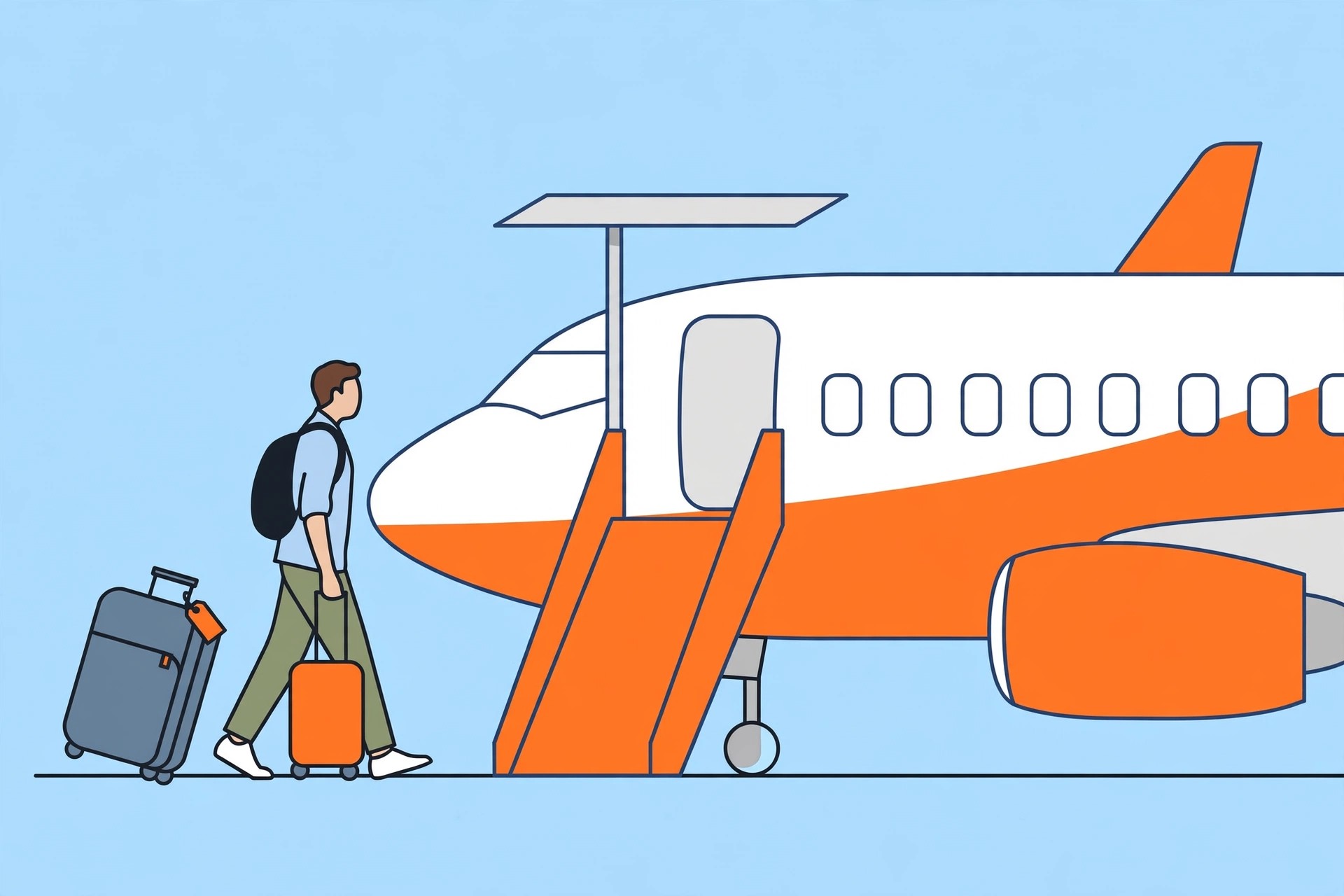
EasyJet Baggage Fees 2026 at a Glance
If you are flying easyJet in 2026, baggage is the single biggest factor that separates a bargain fare from an expensive one. The airline’s headline ticket prices rarely include anything beyond one small cabin bag, and every additional bag — whether it goes in the overhead locker or the hold — carries a fee. This guide breaks down the easyJet baggage fees for 2026 in full: what you get free, what each bag costs, the weight and size limits, and the step-by-step method for keeping your baggage bill as low as possible. This is the complete EasyJet baggage fees 2026 guide.
Here is the short version of EasyJet baggage fees 2026 before we go deep:
| Bag type | Size | Weight limit | Fee when booked online | Fee at the airport |
|---|---|---|---|---|
| Small cabin bag (free) | 45 × 36 × 20 cm | Up to 15 kg | Free | Free |
| Large cabin bag | 56 × 45 × 25 cm | Up to 15 kg | From £5.99 | Up to £48–£60 at the gate |
| 15 kg hold bag | Max 275 cm total dimensions | 15 kg | From £6.99 | From £40 |
| 23 kg hold bag | Max 275 cm total dimensions | 23 kg | From £9.49 | From £48 |
| Excess weight | — | Up to 32 kg per bag | From £12 per 3 kg unit | £12 per kg |
All fees above are per bag, per flight, and easyJet’s prices are dynamic: they change with the route, the season, and how far ahead you book. Treat the online “from” prices as the floor and assume airport prices are the punishment tier. For more comparison context, see our breakdown of Ryanair baggage fees 2026, the other European budget airline most easyJet flyers compare against. Always double-check the latest figures on easyJet’s official baggage page before you fly.
The Free Allowance: One Small Cabin Bag
Every easyJet passenger, on every fare, gets one small cabin bag free. It must measure no more than 45 × 36 × 20 cm including handles, wheels, and external pockets, and it must fit under the seat in front of you. easyJet currently states a maximum weight of 15 kg, with the practical condition that you must be able to lift and carry the bag yourself.
This free allowance is more generous than it looks. At roughly 32 litres of packing space, the bag is large enough for a 4–5 day trip if you pack efficiently, and it is noticeably bigger than the free bag most rival budget airlines offer. The critical measurement is the 20 cm depth: that is the dimension that decides whether the bag actually slides under the seat. Soft bags and backpacks compress to fit; a rigid mini-case that measures exactly 20 cm empty can be snug once packed. Grasping this free allowance is the first step to mastering EasyJet baggage fees 2026.
What counts as a small cabin bag
Handbags, rucksacks, laptop bags, and small trolley cases all qualify as long as they stay within the 45 × 36 × 20 cm envelope. If you are travelling on a Standard fare, your handbag or laptop bag must go inside this single bag before boarding — you cannot board with the free bag plus a separate handbag unless your booking also includes a large cabin bag. Airport shopping, an overcoat, and an umbrella may also be carried separately, and crutches or walking sticks are always allowed.
Large Cabin Bags: The Overhead Locker Option
Anything bigger than the small cabin bag but no larger than 56 × 45 × 25 cm is a large cabin bag. It goes in the overhead locker, it has the same 15 kg weight limit (liftable unaided), and — crucially — it is not free. There are two ways to get one:
- Buy it as an add-on: prices start at £5.99 when booked online, but they are dynamic. On a busy summer route you can pay several times that. Book it during the booking flow for the cheapest price.
- Get it included: Up Front and Extra Legroom seats, FLEXI fares, and easyJet Plus memberships include one large cabin bag.
You cannot buy a large cabin bag at the airport in advance of boarding — availability simply does not exist at that point. If you arrive at the gate with an oversized bag or a second bag you did not pay for, easyJet will take it, put it in the hold, and charge the airport gate fee, which runs up to £48–£60 depending on how the fare is displayed in your local currency. A maximum of two cabin bags per passenger is permitted: one small and one eligible large bag. This two-bag cap is a fixed rule across EasyJet baggage fees 2026.
Speedy Boarding bonus
Passengers who purchase a large cabin bag also get Speedy Boarding as part of the bundle, which means earlier access to the overhead lockers. On full flights, late boarders sometimes have their cabin bags moved to the hold anyway, so this is a genuine practical perk rather than marketing fluff.
Hold Luggage: 15 kg and 23 kg Options
Checked (hold) bags are where the EasyJet baggage fees 2026 structure matters most for families and longer trips. The rules:
- Up to 3 hold bags per passenger, including children.
- Choose 15 kg or 23 kg per bag at purchase. The standard is 23 kg.
- Pre-booked extra weight can be added in 3 kg units up to a maximum of 32 kg per bag (around £15 per 3 kg unit booked online, route-dependent).
- No single bag may exceed 32 kg, and total dimensions (length + width + height) must not exceed 275 cm.
- If your bag is over your allowance at the airport, you pay £12 per kilo at the desk — dramatically more expensive than pre-booking.
The key money rule: always buy hold luggage online in advance, ideally during the original booking. A 23 kg bag can cost under £10 online on a quiet route, while the same bag added at the airport costs many times more. The prices move with route and season, so check the exact figure shown for your specific flight rather than relying on anyone’s table.
The pooling trick for groups
easyJet allows passengers travelling together to pool their weight allowance. If you and a companion each bought a 23 kg bag, you share a combined 46 kg — one bag can be 26 kg and the other 20 kg, for example, as long as no single bag exceeds 32 kg. This is genuinely useful for couples where one person packs heavy and the other packs light, and it is one of the few genuinely generous touches in the budget-airline world.
Sports Equipment and Special Items
Skis, snowboards, golf clubs, bicycles, and surfboards cannot simply be counted as ordinary hold bags. easyJet sells them as separate “sports equipment” add-ons, split into small and large categories. As a guide, small sports equipment starts around £37 online (about £47 at the airport), while large sports equipment starts around £45 online (about £55 at the airport), with prices varying by route. Musical instruments larger than a large cabin bag must be checked in — or, in some cases, you can book a separate seat for them. Always add sports items during booking: airport pricing is steep and the items need to be registered anyway. Sports equipment sits outside the standard EasyJet baggage fees 2026 table, so budget for it separately.
Children, Infants, and Pushchairs
Children aged two and over, and infants with their own booked seat, get exactly the same baggage allowance as an adult passenger. For babies travelling on an adult’s lap, the rules are different: the baby gets no cabin bag of their own, but you may bring one additional small baby-changing bag on board free of charge, up to 45 × 36 × 20 cm, which must fit under the seat.
Pushchairs and strollers are handled generously: you can take a stroller to the gate and have it put in the hold free of charge, plus one additional item such as a car seat, travel cot, booster seat, buggy, or baby back carrier — also free. Anything beyond those two items must be booked as ordinary hold luggage. These family rules are unchanged in EasyJet baggage fees 2026.
Step-by-Step: How to Pay the Lowest Possible easyJet Baggage Fees
Follow this sequence and you will almost never pay more than the minimum — every step reflects the latest EasyJet baggage fees 2026 figures:
Step 1 — Decide what you actually need before you book
Open your case at home and check: does everything fit in a 45 × 36 × 20 cm bag? If yes, your baggage cost is £0 and you can skip the rest of this guide. Be honest about the 20 cm depth — measure the bag packed, not empty, including wheels and handles.
Step 2 — Add bags during the booking flow, not after
The cheapest moment to buy any bag is while you are buying the ticket. Prices rise as departure approaches and as the flight fills. Add large cabin bags and hold luggage in the same session as the fare.
Step 3 — Choose the 15 kg hold bag if you travel light
easyJet’s 15 kg hold option is unusual among budget airlines and a genuine bargain for short breaks. Do not buy 23 kg “just in case” — weigh your packed bag on a bathroom scale and buy the smallest allowance that fits. You can always add 3 kg units later if plans change.
Step 4 — Weigh everything before you leave for the airport
At £12 per kilo over the limit at the desk, a 3 kg overweight bag costs £36 at the airport versus a fraction of that if pre-booked. A cheap luggage scale pays for itself on the first trip.
Step 5 — Use the pooling rule with travel companions
Put the heavy items in one person’s bag and the light items in the other’s. As long as the combined weight stays within your combined allowance and no bag exceeds 32 kg, you avoid overweight fees entirely.
Step 6 — Board with one bag unless you paid for two
On a Standard fare, consolidate your handbag, laptop, and duty-free purchases into the free cabin bag before you reach the gate. The gate fee of up to £48–£60 for a second or oversized bag is the single most avoidable charge in this entire guide.
easyJet Baggage vs the Competition
Compared with Ryanair, easyJet’s free cabin bag (45 × 36 × 20 cm, ~32 litres) is substantially more usable than Ryanair’s free bag (40 × 25 × 20 cm). That single difference means a surprising number of travellers can fly easyJet with no baggage fee at all, while the same trip on a rival would force a paid upgrade. Where easyJet loses ground is at the top end: its airport gate and desk fees are punishing, so the airline rewards planners and punishes procrastinators. That is why checking the full EasyJet baggage fees 2026 breakdown matters more than comparing headline fares.
Compared with full-service carriers like Delta’s 2026 baggage policy or United’s baggage fees for 2026, easyJet’s entire model is inverted: the base fare is the cheapest part of the trip, and the bags are where the airline makes its margin. Do the all-in maths — fare plus the bags you actually need — before declaring easyJet the cheapest option. On routes where you need a 23 kg hold bag each way, the gap to a legacy carrier narrows fast.
For general packing strategy that applies to any airline, our guide to how much it costs to check a bag in 2026 covers the industry-wide picture.
Frequently Asked Questions
The most common questions about EasyJet baggage fees 2026, answered in brief.
Is any baggage free on easyJet?
Yes — every passenger gets one small cabin bag up to 45 × 36 × 20 cm and 15 kg free of charge. It must fit under the seat in front of you. Everything else costs extra.
How much is a large cabin bag on easyJet in 2026?
From £5.99 when booked online, but prices are dynamic and can be several times higher on busy routes. Buying a large cabin bag at the gate costs up to £48–£60, and the bag goes in the hold.
How much does easyJet charge for a 23 kg hold bag?
From £9.49 per bag, per flight when booked online in advance. The same bag added at the airport costs dramatically more, so always pre-book. A lighter 15 kg option starts from £6.99.
What is easyJet’s excess baggage charge?
If you pre-book extra weight online, it costs from around £12–£15 per 3 kg unit per bag per flight, up to a 32 kg maximum per bag. At the airport desk, excess weight costs £12 per kilo — so a 3 kg overage costs £36 at the desk.
Can I pool baggage allowance with my travel companion?
Yes. Passengers flying together can pool their combined hold-baggage weight across their bags, as long as no individual bag exceeds 32 kg.
Does easyJet allow pets?
No. easyJet does not carry pets in the cabin or in the hold, including emotional support animals. Certified assistance dogs are the only exception, with advance notice and documentation required.
What happens if my cabin bag is too big at the gate?
Gate staff will take the bag, place it in the hold, and charge the airport gate fee of up to £48–£60. The bag must still fit within hold limits. Measure before you travel to avoid this.
Can babies have baggage on easyJet?
Infants on a lap get no cabin bag, but you may bring one free baby-changing bag up to 45 × 36 × 20 cm. A pushchair plus one extra item (car seat, travel cot, etc.) goes in the hold free. Infants with their own seat get the full adult allowance.
Naeem Abbas is a travel writer and frequent flyer with over 6 years of experience navigating airports across Asia, Europe, and the Middle East. He has flown with 40+ airlines and specializes in baggage policies, airport hacks, and honest airline reviews. Every guide on AirlineFeed is researched from official airline sources and real travel experience.
Naeem Abbas is a travel writer and frequent flyer with over 6 years of experience navigating airports across Asia, Europe, and the Middle East. He has flown with 40+ airlines and specializes in baggage policies, airport hacks, and honest airline reviews. Every guide on AirlineFeed is researched from official airline sources and real travel experience.